
Streamline Your Payment Processing
Effortlessly manage in-person and online transactions with our comprehensive payment solutions.
Payment Companies: Let Us Secure You Cheaper, Smarter Merchant Services
Start here: how we cut your card processing costs fast
We are a merchant services broker UK, and our sole focus is helping UK businesses pay less for card processing while securing better terms from payment companies. If you are tired of confusing statements and suspect you are overpaying, you are in the right place.
Here is how the payments industry actually works. Payment companies set “retail” rates for individual merchants, but we use our volume leverage to access “wholesale” style rates that are normally reserved for larger portfolios. By pooling the processing volume of hundreds of clients, we unlock pricing tiers that most standalone businesses simply cannot reach on their own.
We often beat standard bank rates by up to 20% on average for UK SMEs, without changing how you take payments day to day. Your customers will not notice a thing, but your cash flow will.
Our service enables businesses to accept payments more efficiently and expand their market reach by securing better rates and terms from leading payment companies.
Our service is 100% free to your business. We are paid by the acquiring banks and payment providers when we place or optimise business with them. You keep every penny of the savings we negotiate on your behalf.
Ready to see what you could save? Upload your latest merchant services or gateway statement for a free cost comparison with no obligation. It takes five minutes and could be worth thousands.
What payment companies actually do (and why fees are so confusing)
In simple terms, payment companies are the businesses that move money from your customers to your bank account whenever a card payment or digital payment is made. This includes acquirers (who settle funds and provide merchant acquiring services, enabling merchants to accept card payments by processing transactions and managing settlement), payment gateway providers UK (who handle secure online connections), PSPs (payment service providers offering bundled solutions), and pay-fac models (where platforms like Shopify aggregate sub-merchants under one master account).
The main roles payment companies perform
Payment processing involves multiple functions that most merchants never see:
- Authorisation: Checking the cardholder has sufficient funds or credit
- Authentication: Verifying the customer is who they claim to be (3D Secure, biometrics)
- Clearing and settlement: Moving funds between the issuing bank and your merchant account
- Fraud prevention: Screening transactions in real time using AI and rule-based systems
- Chargeback handling: Managing disputes when customers query a transaction
- PCI compliance support: Helping you meet card data security standards
- Reporting tools: Providing dashboards and exports for reconciliation
How a £100 card payment actually works
Imagine a sale is made when a customer purchases something for £100 from your online shop using a Visa debit card. Here is what happens behind the scenes:
| Party | Role | Typical share of fees |
|---|---|---|
| Issuing bank | Issued the customer’s card, authorises the transaction | Interchange fee (often 0.2-0.3% for UK debit) |
| Card scheme (Visa/Mastercard) | Routes the transaction, sets network rules | Scheme fee (roughly 0.02-0.05%) |
| Acquiring bank | Holds your merchant account, settles funds to you | Acquirer markup (varies widely) |
| Payment gateway | Securely transmits and tokenises card data | Gateway fee (often 10-30p per transaction) |
| You (the merchant) | Receives the net settlement | Keeps the rest after all fees |
That sounds straightforward, but statements rarely break it down so clearly.
Why your statement is so hard to read
Most merchants receive monthly invoices packed with line items: interchange, scheme fees, acquirer markup, gateway fees, terminal rental, PCI non-compliance fees, chargeback fees, and sometimes rolling reserves for higher-risk sectors. Many payment processing companies bundle these together or use jargon that obscures the true cost.
We act as your expert translator. We read the small print, unbundle the charges, and then negotiate simpler, cheaper pricing structures on your behalf.
Let us review a recent merchant statement so we can identify exactly where your existing payment companies are overcharging you.
The main types of payment companies you will meet in the UK
Most UK businesses deal with several payment companies at once, one for in person payments, another for online payment, and perhaps a third for recurring payments or direct debit. We help consolidate or coordinate them so you are not overpaying across multiple relationships.
For example, Mollie UK is a payment company with a growing local presence, focusing on serving UK-based digital businesses. Their recent team expansion and commitment to the UK market demonstrate confidence in further growth, especially as the UK remains one of Europe’s largest ecommerce markets.
Quick overview of the main categories
| Type | What they do | UK examples |
|---|---|---|
| Merchant acquirers | Hold your merchant account, settle card funds | Worldpay, Barclaycard, Lloyds Cardnet, Elavon |
| Payment gateways | Securely connect your website or app to acquirers | Stripe, Checkout.com, Adyen, Worldline |
| All-in-one PSPs | Bundle acquiring, gateway, and terminals in one package | Square, SumUp, Zettle, Shopify Payments |
| High-risk specialists | Serve industries mainstream acquirers avoid | Paysafe, Rapyd, Merchant One, Trust Payments |
The UK payments market processed hundreds of billions in card transactions in 2024, with Worldpay, Barclaycard, and Global Payments handling a large share of that volume. Contactless payments now account for around 90% of in-store card transactions, and digital wallets like Apple Pay and Google Pay continue to grow.
For sectors labelled “high risk” by mainstream payment processors (think travel, nutraceuticals, subscription billing, or online trading), we know which banks and PSPs are open to these industries and can often secure high risk merchant account instant approval subject to basic underwriting checks.
Our role is to compare card processing fees and terms across this entire ecosystem, not just focus on one provider. We align the right mix of payment companies to your business model, sales channels, and growth plans.
Speak to our team before signing any new payment contract or terminal lease so we can benchmark it against our wider panel.
Card acquirers and full-stack processors
Card acquirers and full-stack processors handle the core movement of card funds. They hold your merchant account, manage settlement, and often supply terminals and virtual terminals as part of the package.
Key UK and global examples:
- Worldpay (now part of FIS, handling around 40% of UK card volume)
- Global Payments
- Barclaycard Payments
- Lloyds Cardnet
- Elavon
- Fiserv (Clover terminals)
- Adyen (enterprise-grade, unified platform for global commerce)
Many of these providers support 100+ currencies and multiple regions, which is critical for UK exporters and online brands selling across Europe and North America. If you are processing global payments or aiming to expand, the right acquirer can simplify multi-currency settlement and reduce foreign exchange costs.
Pricing from these acquirers varies widely by sector, transaction volume, and risk profile. Common negotiation points where we often save money include:
- PCI fees and non-compliance charges
- Minimum monthly charges
- Non-usage or dormancy fees
- Terminal rental and swap-out costs
We maintain active relationships with these acquirers, which allows us to match clients to the provider that actually wants their profile, rather than forcing a one-size-fits-all solution.
Processing over £500,000 per year in card volume? Request a tailored acquirer comparison from us. This is where we typically secure the deepest discounts.
Payment gateway providers and online payment platforms
Payment gateway providers UK act as the secure online plumbing that connects eCommerce sites, apps, and software platforms to acquirers. They handle tokenisation (replacing card numbers with secure tokens), 3D Secure authentication, and API integration with your tech stack.
Leading gateways and platforms with a UK footprint:
- Stripe: Developer-friendly APIs, server libraries for rapid integration, strong for SaaS and subscription billing
- Checkout.com: Multi-market digital businesses, smart routing, competitive for high-volume online merchants
- Adyen: Enterprise unified reporting, embedded finance features, supports 130+ currencies
- PayPal (including Braintree): 400+ million users globally, strong buyer protection, trusted for low-volume eCommerce
- Shopify Payments: Native integration for Shopify stores, simple setup, ideal for smaller online retailers
- Worldline: European strength, multi-channel capability
- Payoneer: Cross-border payouts, popular with marketplaces and freelancers
Each gateway offers different strengths. Stripe suits tech-savvy teams who want prebuilt integrations and flexible APIs. Checkout.com works well for digital businesses scaling across markets. Shopify Payments provides a seamless experience for ecommerce platforms without separate gateway contracts.
Gateway pricing includes per-transaction fees, cross-border surcharges, and sometimes monthly fees for advanced fraud tools or routing logic. These are all elements we review and benchmark for you.
We help clients choose the gateway with the best blend of conversion rates, smart routing, and fees for their traffic profile, rather than relying on default or bundled options.
Selling online? Let us compare your existing gateway costs against alternative providers and blended solutions.
POS providers, card machines and softPOS solutions
Physical payment acceptance is still vital in the UK. From cafés and salons to multi-site retail and hospitality, customers prefer the speed and convenience of card and contactless payments. But the “cheapest card payment machine” is not always the best overall deal.
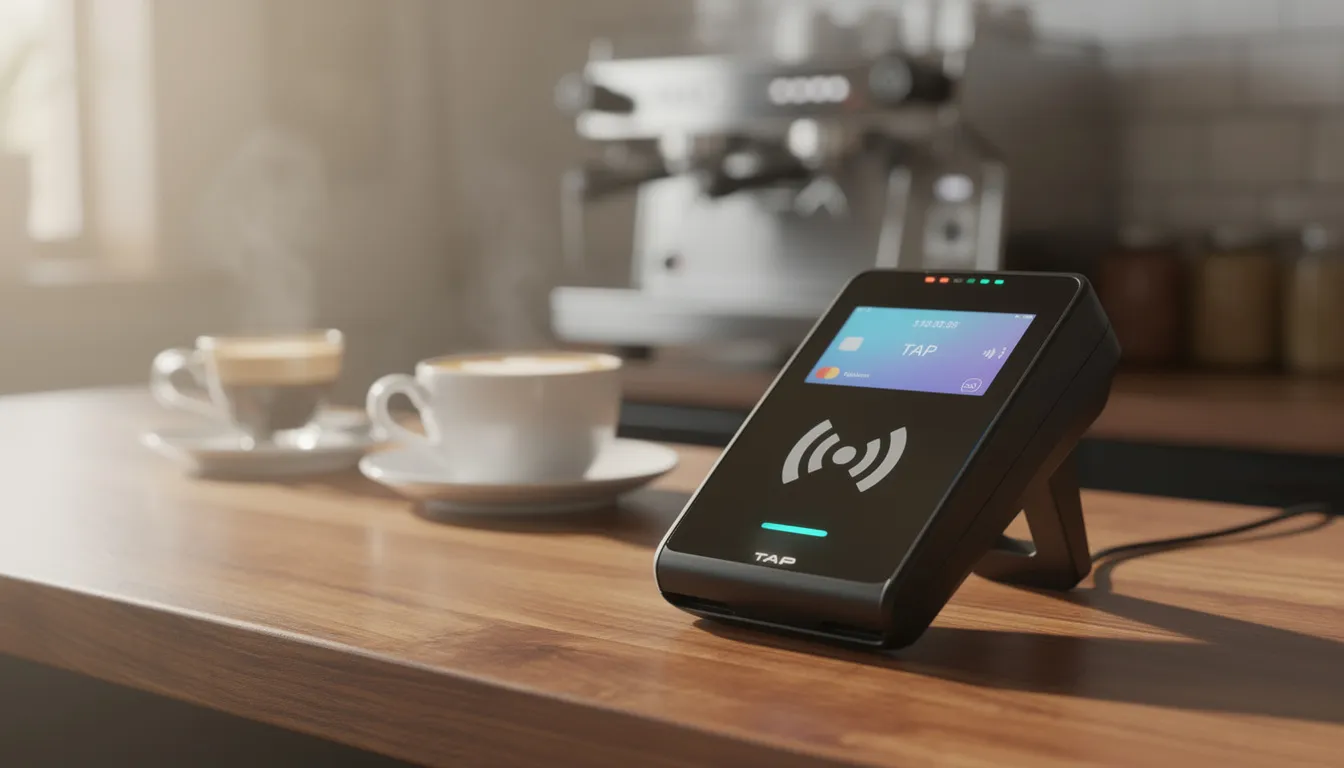
Familiar brands in the UK market:
- SumUp (flat-rate, no monthly fees, popular with micro-merchants)
- Square (free POS software, 1.75% card-present rate, good for SMEs)
- Zettle by PayPal (simple setup, integrates with PayPal ecosystem)
- Clover by Fiserv (full POS system with inventory, payroll, analytics)
- Ingenico terminals (used by Worldpay and other acquirers)
- SoftPOS solutions (turn Android devices into contactless terminals)
Mobile payment solutions are increasingly important for small businesses and retailers. Mobile POS systems, mobile wallets like Apple Pay and Google Pay, and in-person mobile card readers enable seamless transactions and greater flexibility for merchants on the go.
Main pricing models for card machines in the UK:
| Model | How it works | Best for |
|---|---|---|
| Upfront hardware purchase | Pay for terminal outright, lower transaction fees | Higher-volume merchants |
| “Free” terminal | No upfront cost, higher transactional rates | Low-volume or seasonal businesses |
| Bundled POS subscription | Monthly fee includes hardware, software, support | Multi-location retail, hospitality |
We look beyond headline terminal prices to the total cost of ownership over 12 to 36 months. This includes contract length, exit fees, PCI fees, and settlement times. A terminal that looks cheap upfront can cost far more over three years if the effective rate is higher or you are locked into unfavourable terms.
We help clients shift from dated terminals and long contracts signed years ago to more flexible, modern solutions that often halve their effective acquiring margin.
Send us details of your current terminals and contract end dates so we can plan a low-friction migration to a better deal.
Navigating global payments and cross-border commerce
Expanding into global commerce opens up new opportunities, but it also brings a host of challenges when it comes to payment processing. With so many payment processing services and payment processing companies to choose from, it’s crucial to select partners that understand the complexities of international transactions and can support your business as it grows.
The best payment processing companies for cross-border commerce offer a broad range of payment methods, from card payments and digital payments to bank transfers and SEPA Direct Debit. They help you manage transaction fees and monthly fees transparently, so you always know your true cost of doing business. By optimising your fee structure and supporting the payment methods your customers prefer—such as Google Pay, Apple Pay, or contactless payments—you can boost customer satisfaction and increase conversion rates across all your sales channels.
Recurring payments, direct debit, and robust fraud prevention are especially important for businesses with international customers or subscription models. Look for payment processors that integrate seamlessly with your existing systems and ecommerce platforms, enabling you to manage all your transactions and cash flow from one platform. This not only streamlines operations but also gives you instant access to the data you need to make informed decisions.
Ultimately, navigating global payments is about more than just accepting money from abroad—it’s about choosing payment processing services that are flexible, secure, and tailored to your specific needs. With the right partners, you can reduce costs, improve customer experience, and unlock new markets with confidence.
How we compare payment companies and secure better deals for you
We act as your outsourced payments team. We compare payment processing services across dozens of payment companies, then negotiate on your behalf to secure the best terms for your specific needs.
Our typical review process
- Analyse recent merchant statements: We request your last three months of processing statements
- Map all visible fees: We identify interchange, scheme fees, acquirer markup, gateway charges, terminal costs, and hidden extras
- Model savings scenarios: We calculate what you would pay with 2-3 alternative providers
- Present clear options: We give you a side-by-side comparison with pros and cons for each
We use our aggregated processing volume across UK merchants to access lower rate tables and preferential terms that are typically unavailable to standalone businesses.
We also look at non-price factors: approval rates, fraud tools, integration effort, settlement time, and support quality. Our goal is to make sure you do not swap low rates for operational headaches.
Our analysis is free. There is no obligation to switch. We will tell you directly if your existing payment companies are already on competitive terms.
Start a free cost and service comparison with us by sending three recent processing statements.
Using volume leverage to unlock “wholesale” style rates
We pool the processing volume of hundreds of merchants across the UK. This gives us collective buying power with acquirers and gateways that individual businesses simply cannot match.
Banks and payment companies often publish “rate cards” for smaller merchants, with set fees that leave little room for negotiation. But they will offer us bespoke pricing on interchange-plus or blended structures to win our aggregated volume.
What volume leverage can deliver:
- Lower card-present and eCommerce rates
- Reduced authorisation fees
- More favourable chargeback and refund costs
- Faster terminal replacements and support escalation
- Reduced rolling reserves for higher-risk profiles
- Better support commitments in writing
Data from the industry suggests brokers secure 0.2% to 0.5% reductions on average compared to direct bank offers. For a business processing £1 million per year, that translates to £2,000 to £5,000 in annual savings, often more.
You retain your own direct contractual relationship with the provider if you prefer. We simply negotiate the commercial terms behind it.
Let us benchmark your current effective rate against what our volume deals could deliver.
Free to you: how we are paid and why it matters
Our service is 100% free to your business. We are paid by the acquiring banks and payment companies when we place or optimise business with them. The bank pays us, you keep the savings.
This means:
- No consultancy fees
- No hidden charges from us
- No obligation to accept any proposal we present
We address potential conflict concerns directly. We work with a broad range of UK and global providers and present multiple options, highlighting total cost and service quality, not just the highest commission deal for us.
This commercial model is standard in the UK payments industry. It works similarly to how insurance brokers or energy brokers operate, which most business owners already understand. Financial institutions pay us for bringing them quality merchant volume, and you benefit from the competitive tension we create between them.
Our aim is long-term relationships. We focus on sustainable savings and excellent service rather than short-term deals that fall apart after six months.
Book a short call to have our fee structure and panel approach explained in more detail if you wish.
Payment processing security: protecting your business and your customers
Security is at the heart of every successful payment processing strategy. As digital payments and online transactions become the norm, businesses must ensure their payment processing services are built on a foundation of trust and compliance. Choosing payment processors that work closely with financial institutions and adhere to the highest security standards is essential for protecting both your business and your customers.
Modern payment processing solutions should offer advanced fraud prevention tools, secure API integration, and full compliance with regulations governing digital wallets, card transactions, and online payments. For UK SMEs, leveraging open banking can add an extra layer of security, reducing reliance on traditional card rails and minimising the risk of fraud.
Instant access to transaction data across all your sales channels allows you to monitor cash flow in real time and quickly spot any unusual activity. This proactive approach to security not only safeguards your funds but also reassures your customers that their sensitive information is protected at every stage of the payment journey.
By prioritising payment processing security, you’re not just meeting regulatory requirements—you’re building a reputation for reliability and customer care. Secure payment processing services enable businesses to grow with confidence, deliver a seamless customer experience, and stay ahead in an increasingly digital world.
Working with high-risk and “hard to place” industries
Some sectors are labelled “high risk” by payment companies. This leads to outright declines, punitive rolling reserves, or transaction fees that erode your margins. We specialise in helping these businesses get fair access to merchant services.
Industries we regularly support:
- Travel and ticketing (long fulfilment windows, refund exposure)
- Online coaching and education subscriptions
- CBD products (where UK legal and compliant)
- Nutraceuticals and supplements
- Gaming affiliates and iGaming
- High-ticket B2B services with remote payments
- Forex and trading education
- Adult content (age-verified, compliant)
Standard PSPs reject 10% to 20% of applications from these sectors. Many competitors simply will not touch them. We maintain relationships with acquirers and PSPs that actively support these profiles, including providers willing to offer high risk merchant account instant approval subject to basic underwriting checks.
We negotiate to reduce rolling reserves (often cutting them from 10% to 5%), shorten reserve hold periods, and structure chargeback thresholds in a way that protects your cash flow while satisfying the bank’s risk appetite.
We also help clients strengthen their compliance posture. We advise on terms and conditions, refund policies, KYC practices, and chargeback responses. This improves approval odds and often leads to better ongoing pricing.
Operating in a high-risk sector? Speak to us before you apply again or accept punitive terms from a single provider.
Compliance, FCA regulation and staying on the right side of the rules
The UK payment industry is supervised by the Financial Conduct Authority (FCA). Most reputable payment processors and e-money firms are either authorised or registered with the FCA, and this matters for the safety of your funds and the legitimacy of the services you receive.
Key concepts to understand:
| Term | What it means |
|---|---|
| FCA authorisation | The provider is regulated and supervised by the FCA |
| Safeguarding | Client funds must be held separately from the provider’s operating money |
| PCI DSS | Card data security standards that all merchants and processors must follow |
| Strong Customer Authentication (SCA) | PSD2 requirement for additional verification on most card transactions |
We only work with trusted payment companies that meet UK and EU regulatory standards. We help businesses avoid unregulated or poorly supervised providers that pose financial and reputational risk.
We can assist clients in understanding and completing necessary compliance steps, such as PCI questionnaires or documentation for onboarding with new acquirers. Open banking solutions and SEPA direct debit options also require proper regulatory standing, and we guide you through this.
Good compliance leads to better pricing. Acquirers feel more confident about a merchant’s risk profile when documentation is in order, and this confidence translates into lower fees and fewer account reviews.
Let us review whether your current providers are FCA authorised and whether your compliance posture might be holding back better offers.
Comparing card processing fees and choosing the right payment mix
There is no single “best” payment company in the UK. The right answer depends on your sector, sales channels, average ticket size, and growth plans. A high-street retailer has different needs from a SaaS platform billing subscriptions across Europe.
Key cost elements we compare for clients
- Card-present vs card-not-present rates
- Domestic vs international card costs
- Gateway and authorisation fees
- Monthly minimums and account fees
- Chargeback and refund pricing
- Additional fees for specific payment methods (Amex, corporate cards)
Typical UK card processing fees for SMEs in 2025 might span roughly 1.4% to 2.5% plus a fixed pence element per transaction. However, effective rates can creep higher once hidden monthly fees are factored in.
We calculate the true effective rate for each client, including all monthly and ancillary charges. Then we show what that would look like with 2-3 alternative payment processing companies.
Beyond cards: other payment methods to consider
| Method | Typical cost | Best for |
|---|---|---|
| Open banking (A2A transfers) | Under 1% | High-value transactions, reducing card fees |
| Direct debit | Low pence per transaction | Recurring payments, subscriptions |
| Digital wallets (Apple Pay, Google Pay) | Same as card | Faster checkout, higher conversion |
| Bank transfers | Varies | B2B invoices, large orders |
| BNPL (Klarna, Clearpay) | 3-6% typically | Increasing average order value |
We consider the full mix of payment methods, not just card transactions, to reduce your overall acceptance costs. Many merchants can save money by encouraging customers to use open banking for high-value purchases while keeping cards for convenience on smaller orders.
Let us build a side-by-side fee comparison for your business so you can make an informed decision.
Balancing price, performance and customer experience
Choosing payment companies is not only about the lowest rate. Payment failures, slow settlements, or clunky checkouts can cost more in lost sales and admin time than you save on fees.

Non-price factors we benchmark:
- Payment success rates: Does the gateway decline legitimate transactions?
- Speed of settlement: Same day, next day, or T+3?
- Quality of support: Can you reach a human when things go wrong?
- Reporting tools: Integration with Xero, QuickBooks, existing systems?
- Ease of integration: Does it fit your tech stack and ecommerce platforms?
We help clients avoid common pitfalls. Picking the cheapest gateway but suffering from increased fraud or checkout friction under Strong Customer Authentication rules is a false economy.
For higher-volume merchants, we often recommend a resilient setup using more than one payment company or routing option. This reduces downtime, improves uptime, and gives you instant access to a backup if your primary provider has issues.
Our role is to design a payment stack that aligns with the customer experience, from in-store contactless to one-click eCommerce and recurring billing. The goal is customer satisfaction and ambitions faster realised, not just a lower fee on paper.
Have us map your current customer payment journey and suggest specific improvements backed by suitable providers.
Next steps: let us handle your payment companies so you can focus on growth
Payment companies, contracts, and pricing structures are complex. Fee structures change, new providers enter the market, and your business evolves. Working with us turns this into a straightforward, managed process.
What we offer
- Compare card processing fees across the UK market
- Use volume leverage to secure better rates than you could get direct
- Specialise in high-risk and hard-to-place sectors others avoid
- Provide all of this at no cost to your business
How to get started
- Send us recent merchant statements (last 1-3 months)
- Book a 15-minute discovery call with our team
- Or complete a short online form with your turnover, average transaction value, and main sales channels
We will analyse your current setup, identify where you are overpaying, and present clear options for improvement. There is no obligation to switch provider. Even if you stay where you are, you gain clarity on whether your current deal is competitive.
We work with UK SMEs, enterprise clients, and everything in between. We enable businesses to access the best payment processing companies for their specific needs, whether that means consolidating all your sales channels under one platform or finding the right specialist for a particular payment method.
Upload your latest statements today. Our team will begin a free cost analysis and show you how much you could save with better-matched payment companies. The money you save goes straight back into your business, improving your funds, your technology investment, and your growth.
Let us do the hard work. You focus on what you do best.