
Streamline Your Payment Processing
Effortlessly manage in-person and online transactions with our comprehensive payment solutions.
Payment System
Take Payments Without Overpaying
Many UK businesses are overpaying on their payment systems and card processing without even realising it. The complexity of interchange fees, scheme charges, and hidden surcharges means that most merchants accept whatever rates they are first quoted, leaving significant money on the table year after year. Many businesses are now turning to online payments for their convenience and cost-effectiveness.
We are a specialist merchant services broker UK, helping businesses across the country secure cheaper, more suitable payment systems. Whether you process card payments in-store, accept payments online, or operate in a high risk sector that struggles to find willing acquirers, our team can help.
Here is the part that surprises most business owners: our service is 100% free to you. We do the hard work of negotiating with banks and payment providers. You keep all the savings. The acquirer or gateway pays us a commission, which does not increase your headline rate.
We achieve this through volume leverage. Because we place significant transaction volumes with acquirers and payment gateway providers UK, these institutions offer us pricing tiers that ordinary merchants cannot access directly. We pass those wholesale rates on to you.
In 2024, a UK-based e-commerce retailer came to us after years with the same provider. After reviewing their statements and switching them to a better-suited acquirer, they reduced their card processing fees by around 20%, saving over £18,000 annually. That money went straight back into their business.
GoCardless can reduce transaction fees by 56% on average for UK businesses. Stripe offers competitive rates and transparent pricing for online payments. PayPal is easy to sign up for and use, but is often considered expensive compared to alternatives. Worldpay handles over 40% of all UK-based online card transactions.
Ready to see what you could save? Upload a recent merchant statement and let us compare card processing fees for you. There is no obligation, and many clients use our analysis simply to benchmark their current deal.

What Is a Payment System?
A payment system is the infrastructure, rules, and technologies that move money between bank accounts for individuals and businesses. At its core, every payment system substitutes for physical cash by using instruments like cheques, electronic messages, or digital tokens to create the debits and credits that transfer value from one party to another. Central banks play a crucial role in facilitating large-scale payment settlement systems and interbank transfers, providing the backbone for secure and efficient settlement within the overall payment infrastructure.
Modern payment systems encompass both traditional instruments (cash, cheque, bank transfer) and newer methods such as debit and credit cards, contactless payments, online gateways, digital wallets, and open banking payments. The diversity is considerable, and choosing the right combination directly affects costs, settlement speed, and customer experience.
In the UK, domestic payments flow through several key schemes:
| System | Purpose | Typical Settlement |
|---|---|---|
| Bacs | Payroll, supplier payments, Direct Debit | 3 working days |
| Faster Payments | Instant transfers up to £1m | Seconds, 24/7 |
| CHAPS | High-value, time-critical transfers | Same day (irrevocable) |
| Visa/Mastercard | Card payments (in-store and online) | T+1 to T+3 |
For international and cross border payments, systems like SWIFT messaging connect banks globally, with settlement occurring through correspondent banking relationships or mechanisms like CLS for foreign exchange transactions.
To understand how a typical card payment works, consider this simplified flow:
- Customer taps their card or enters details at online checkout
- Payment gateway encrypts and transmits data to the payment processor
- Processor forwards the transaction to the card network (Visa, Mastercard) for authorisation
- Issuing bank approves or declines based on available funds and fraud checks
- Approved transactions are batched and sent for settlement
- Funds are transferred from issuing bank to acquiring bank
- Merchant receives payout into their bank account (typically T+1 or T+2)
An efficient payment system reduces costs, supports cash flow, and lowers operational risk for UK businesses of all sizes. When transactions settle faster, you have working capital sooner. When fraud tools work properly, you avoid chargebacks and disputes.
Our role is to help you navigate these moving parts so you can focus on running your business, not deciphering bank statements.
Core Types of Payment Systems in the UK
This section provides a practical overview of the main payment rails a UK business owner actually encounters. Each system has different speed, cost, and risk profiles, and understanding these differences helps you avoid overpaying.
We will cover:
- Bacs and Direct Debit for batch processing
- CHAPS and RTGS for high-value transfers
- Faster Payments for near-instant settlement
- Card schemes and acquiring for in-person and online sales
- Online payment gateways and digital wallets
We help businesses choose the right mix of these systems depending on ticket size, transaction volume, risk profile, and international needs. Choosing the wrong rail or provider can mean higher fees and slower settlement, which is exactly what we work to avoid for our clients.
Not sure which system you are currently using or paying for? Speak to our team and we will clarify your current setup.
Automated Clearing House Style Systems (Bacs) and Real-Time Gross Settlement (CHAPS, RTGS)
Bacs is the UK equivalent of an automated clearing house. It handles batch processing of payments, making it ideal for payroll, supplier payments, and regular Direct Debit collections. The trade-off is speed: Bacs transactions typically settle in three working days. However, the cost per transaction is very low, making it efficient for high-volume, routine payments.
CHAPS (Clearing House Automated Payment System) operates on a real-time gross settlement basis. Each payment is processed individually and settles irrevocably on the same working day. This makes CHAPS essential for high-value, time-critical transfers such as property completions, treasury movements, or large supplier payments where certainty matters more than cost.
Faster Payments sits between these two. It delivers near real-time settlement for most UK bank accounts, typically within seconds, and operates 24 hours a day, 7 days a week. For many businesses, Faster Payments offers an excellent balance of speed and cost.
| System | Cost | Speed | Best For |
|---|---|---|---|
| Bacs | Very low | 3 days | Payroll, regular Direct Debit, bulk payments |
| Faster Payments | Low | Seconds | Supplier payments, refunds, urgent transfers |
| CHAPS | Higher | Same day | Property, large treasury, time-critical |
We help businesses structure their payment processes to minimise unnecessary bank charges. Many companies use CHAPS for payments that could easily go via Faster Payments, or miss Direct Debit opportunities that would improve cash collection.
Let us analyse your bank fee schedule. We can identify where Bacs or Faster Payments could replace more expensive methods without affecting your operations.
Card Schemes and Acquiring (In-Person and Online)
Card schemes like Visa, Mastercard, and American Express provide the networks and rules that connect acquiring banks to issuing banks, enabling card payments to flow between merchants and customers worldwide.
When you accept card payments, whether at a countertop terminal or through an online checkout, several parties take a fee:
- Interchange fee: Paid to the card-issuing bank (set by the card scheme)
- Scheme fee: Paid to Visa, Mastercard, or the relevant network
- Acquirer margin: Retained by your acquiring bank or payment processor
These components combine into your effective rate, which you see on your monthly statement. Understanding this breakdown is important because it reveals where negotiation is possible.
The “cheapest card payment machine” is not just about device cost. It is about the underlying merchant account pricing, contract length, rollover clauses, and hidden surcharges. A terminal that costs nothing upfront but locks you into a five-year contract with above-market rates is not cheap at all.
We compare card processing fees from multiple acquirers and terminal providers to secure more competitive blended or interchange-plus rates for our clients. Because we bring volume to these providers, they offer us terms that individual merchants cannot usually access.
Send us your latest terminal and e-commerce processing statements. We will provide a free, no-obligation comparison showing exactly where you stand against the market.
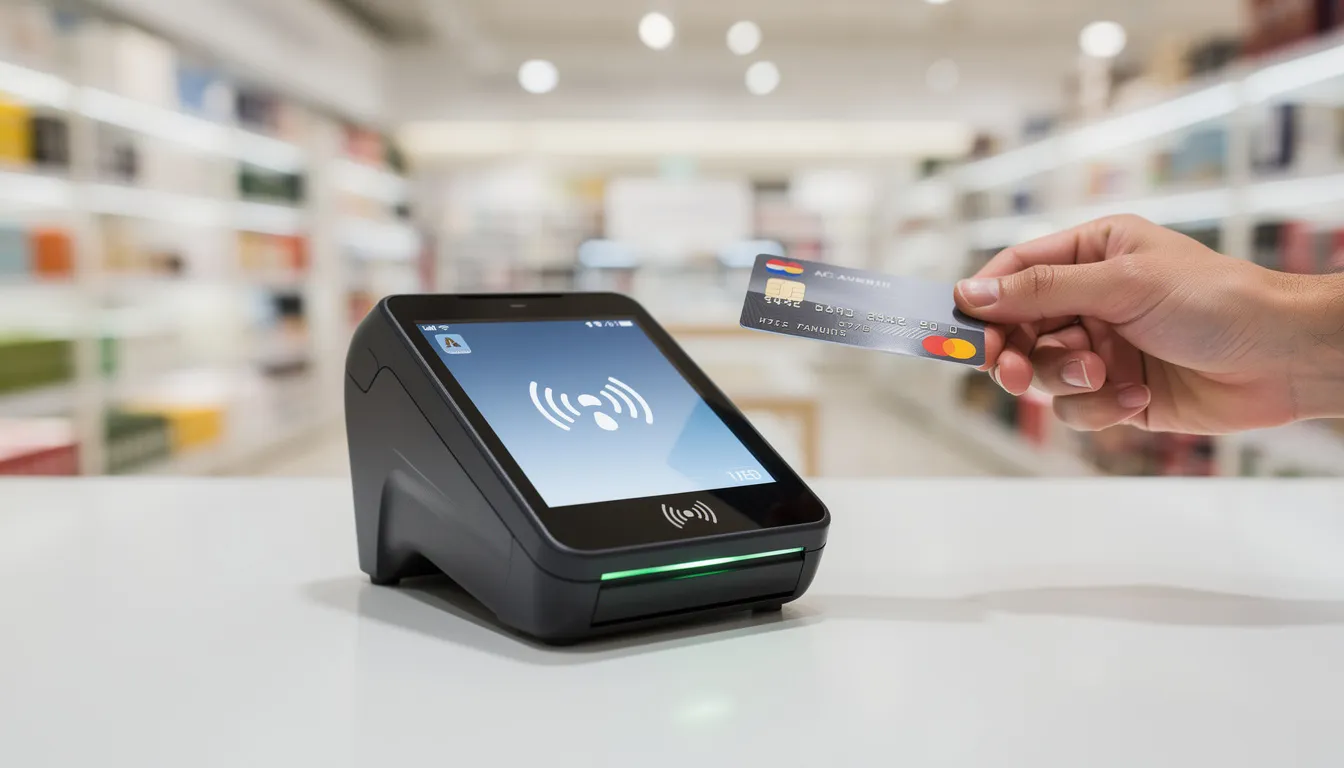
Online Payment Gateways and Digital Wallets
An online payment gateway is the software that securely links a website or app to the card networks or bank rails. It handles encryption, tokenisation, and authorisation, ensuring that sensitive payment data never touches your servers directly. Online payments offer businesses convenience, speed, and security, and are increasingly integrated with other business tools.
Typical UK gateway providers fall into several categories:
- Full-stack processors: Stripe, Adyen, Square (gateway, processing, and acquiring combined)
- Specialist gateways: Opayo (formerly Sage Pay), Worldpay Gateway, Checkout.com
- Platform built-in options: Shopify Payments, WooCommerce Payments, BigCommerce
Digital wallets such as Apple Pay and Google Pay integrate with these gateways to offer customers fast payments and one-click checkout. For mobile-heavy businesses, wallet support can measurably improve conversion rates and customer satisfaction.
We help businesses compare payment gateway providers UK on several dimensions:
- Pricing (percentage fees, fixed fees, monthly charges)
- Settlement times (T+1, T+2, or longer)
- Integration effort (API complexity, platform compatibility)
- Fraud tools (3D Secure 2, machine learning detection, rules engines)
- International coverage (multi-currency, local acquiring)
- Integration with e-commerce platforms and accounting software is often seamless with many online payment systems.
After reviewing fraud tools, it’s important to note that online payment systems prioritize security to protect sensitive financial information.
Planning to sign a new gateway or platform agreement? Speak to our team first. We can often negotiate better terms before you commit.
Security Features in Modern Payment Systems
Security is at the heart of modern payment systems, ensuring that every transaction—whether in-store or payments online—is protected from fraud and data breaches. Today’s systems employ advanced technologies to keep users’ financial information safe at every stage of the payment process.
One of the most effective security measures is tokenization. Instead of transmitting actual card or bank account details, modern payment systems replace sensitive data with unique tokens. These tokens are meaningless to hackers, so even if intercepted, they cannot be used to access funds or personal information. This approach is especially important for businesses handling recurring payments or storing customer details for future transactions.
Encryption is another cornerstone of secure payments. All data transmitted between customers, merchants, and financial institutions is encrypted both in transit and at rest. This means that even if someone manages to intercept the data, it remains unreadable without the correct decryption keys. Encryption standards are continually updated to stay ahead of evolving cyber threats, giving both businesses and consumers confidence in the safety of their financial transactions.
To further reduce the risk of fraud, many payment systems now require two-factor authentication (2FA). This adds an extra layer of security by asking users to verify their identity with something they know (like a password) and something they have (such as a code sent to their phone or a biometric scan). This makes it much harder for unauthorized users to gain access, even if they have obtained login credentials.
By combining these security features, modern payment systems deliver a robust defense against fraud and data theft. For businesses, this means fewer chargebacks, lower risk, and greater trust from customers. For users, it means peace of mind every time they make a payment online or in person.
Open Banking and Payment Systems
Open banking is transforming the landscape of payment systems, making financial transactions faster, more secure, and more efficient for both businesses and consumers. By allowing authorized third-party providers to access bank account information (with customer consent), open banking unlocks a new level of flexibility and innovation in payment processes.
One of the key benefits of open banking is the ability to set up direct debit payments quickly and seamlessly. Gone are the days of paper forms and manual data entry—now, businesses can initiate direct debits electronically, reducing errors and speeding up the onboarding process for new customers. This not only improves cash flow but also enhances customer satisfaction by making it easier to pay bills or subscriptions.
Open banking also enables the use of payment links, which can be sent directly to customers via email, SMS, or messaging apps. Customers simply click the link to pay, without needing to enter card details or log into a separate platform. This streamlined approach reduces friction at checkout, increases conversion rates, and helps businesses get paid faster.
Beyond convenience, open banking provides businesses with valuable insights into customer spending patterns and cash flow trends. By analyzing real-time data from multiple bank accounts, companies can make more informed decisions about inventory, staffing, and financial planning. This level of visibility was previously only available to large enterprises, but open banking brings it within reach of start ups and SMEs as well.
On a global scale, open banking is helping to standardize and simplify cross-border payments, making it easier for UK businesses to serve customers in other countries. With secure, API-driven connections between banks and payment providers, funds can move quickly and efficiently, reducing costs and settlement times.
As digital adoption accelerates, open banking is set to become an essential part of modern payment systems. It empowers businesses to deliver better customer experiences, optimize cash flow, and stay ahead in a rapidly changing financial landscape—all while keeping payments secure and efficient.
Cross-Border and High Risk Payment Systems
This section is for UK businesses trading internationally or operating in sectors that banks class as higher risk. If you sell across borders, deal in multiple currencies, or work in industries like CBD, travel, subscriptions, gaming, or ticketing, you face challenges that mainstream merchants do not.
Cross-border card processing introduces additional cost layers:
- Dynamic currency conversion: Offering customers payment in their home currency (adds margin)
- Multi-currency pricing: Displaying prices in local currencies (requires careful FX management)
- FX margins: The spread your acquirer or bank applies to currency conversion
These margins quietly increase your effective fees, sometimes by 1-2% or more per transaction. Many merchants do not realise how much cross-border fees add up until we break down their statements.
For euro payments, UK businesses can still access systems like SEPA credit transfers and SEPA Instant through certain banks and providers, even after the UK’s departure from the EU in 2020. For high-value EUR or USD payments, SWIFT messaging remains the standard, with settlement through correspondent banks or systems like T2 (TARGET2) for euro clearing. Central banks play a crucial role in facilitating euro payments and settlement within the Eurosystem, especially for interbank transfers.
Common challenges in this space include:
- Slow settlement (sometimes 5+ days for certain corridors)
- Extra compliance checks (source of funds, enhanced due diligence)
- Higher decline rates on international cards
- Limited acquirer appetite for high risk merchant accounts
We work with acquirers and payment institutions that specialise in high risk merchant account instant approval scenarios. To be clear, approvals are still subject to underwriting, and not every business will qualify. But our relationships and experience mean we can often secure accounts where direct applications have failed.
We also negotiate on rolling reserves, delayed payouts, and chargeback thresholds. These terms can significantly impact your cash flow and operational flexibility. Getting them right from the start saves considerable stress later.
Operating in a high risk or cross-border sector? Send us a short summary of your business model and we will match you with suitable acquiring partners.

Challenges and Developments in Cross-Border Payments
Globalisation and e-commerce growth between 2010 and 2024 have driven a surge in cross-border payment volumes. More UK businesses now sell to customers in the EU, US, and beyond, which means more complexity in payment routing, currency conversion, and regulatory compliance.
Legacy systems like STEP2 (for euro payments) and traditional correspondent banking remain in use, but many financial institutions are now connecting to multiple clearing and settlement mechanisms for redundancy and speed. The payments landscape is fragmenting and consolidating at the same time.
For businesses, this creates integration headaches. Connecting older ERP and accounting systems with newer API-led payment platforms is rarely straightforward, especially when handling multiple currencies across different countries.
We help by reviewing the client’s current cross-border flows, then recommending providers that offer:
- Unified reporting across currencies and payment methods
- Multi-currency settlement accounts (reducing FX conversion frequency)
- API integrations that work with modern and legacy systems
- Transparent FX pricing with competitive spreads
Processing significant FX volumes? Let us review how your payments are currently being routed and priced. We often find quick wins that reduce costs without requiring major implementation changes.
Benefits of an Optimised Payment System for Your Business
A properly designed payment system does far more than just collect money. It impacts your pricing strategy, profit margins, cash flow, and the experience your customers have at checkout.
Key business benefits include:
| Benefit | Impact |
|---|---|
| Lower transaction costs | More revenue retained per sale |
| Faster settlement | Improved cash flow, reduced borrowing |
| Higher approval rates | Fewer lost sales at checkout |
| Reduced chargebacks | Lower fees, better acquirer relationships |
| Better reporting | Finance teams reconcile faster, spot issues earlier |
Integrated payments can simplify reconciliation considerably. For example, linking your gateway to accounting platforms like Xero or QuickBooks enables automatic matching of transactions to invoices. This saves hours of manual data entry each month and reduces errors.
Using one platform that consolidates payments, financial services, and business management tools can further streamline operations and enhance scalability. By managing everything in a single, integrated system, businesses can reduce complexity and support growth more efficiently.
On security and compliance, working with providers that offer robust fraud tools (3D Secure 2, velocity checks, device fingerprinting) reduces your PCI DSS scope and protects against fraudulent transactions. The development of these tools has accelerated, and modern systems catch more fraud while causing less friction for legitimate consumers.
Our role is to design a payment setup that fits your company’s sector, risk profile, and growth plan. We do not force a one-size-fits-all solution. Instead, we recommend a combination of services, mechanisms, and providers that deliver the best outcome for your specific situation.
Ready to start? Book a free cost and efficiency review of your current payment system with our team.
Customer Experience and Conversion Impact
Every extra step or failure in a payment journey directly reduces conversion rates. For subscription and recurring revenue models, failed payments cause churn, which costs far more than the original transaction fee.
Consider these examples:
- Card expiry problems: A membership business loses customers when stored cards expire and payments fail. Using bank payments, Direct Debit, or open banking can reduce this churn because account details change less frequently than card numbers.
- Checkout friction: Requiring customers to create an account or enter billing details repeatedly drives abandonment. Modern checkout options like one-click payments, saved cards, and branded payment pages keep customers on site and build trust.
- Mobile optimisation: If your checkout does not work smoothly on mobile, you lose sales. Digital wallets like Apple Pay offer convenience and speed that improves mobile conversion rates significantly.
We help merchants test and compare different payment methods and checkout flows to identify which mix produces the highest conversion at the lowest cost. Sometimes the cheapest processor is not the best choice if it causes more declined transactions or customer frustration.
Let us review your current checkout process and failed payment logs. We can often identify quick wins that recover revenue you are currently losing.
How We Reduce Your Payment System Costs
This section explains our brokerage model and why it works in favour of UK businesses trying to lower payment costs.
Our volume leverage is the foundation. We place significant transaction volume with banks and providers across the UK. Because we bring them a steady flow of quality merchants, they offer us better pricing tiers than they would give to an individual business applying directly. We then pass those wholesale rates on to you.
Here is how we deliver savings:
- Compare card processing fees from multiple acquirers and gateways
- Present clear proposals showing like-for-like comparisons
- Quantify savings in both percentage and annual monetary terms
- Negotiate contract terms (rollover clauses, termination fees, notice periods)
- Conduct ongoing statement audits to catch “fee creep” over time
Our service is free to the business owner. The acquirer or gateway pays us a referral or portfolio commission. Crucially, this does not increase your headline rate. We are paid from the provider’s margin, not added on top of your costs.
Beyond pricing, we provide additional value:
- Contract negotiation to remove unfavourable terms
- Risk management advice for high-risk sectors
- Ongoing relationship management with your provider
- Regular reviews to ensure your pricing remains competitive
In 2023 and 2024, we typically helped clients reduce blended processing costs by around 10 to 25%, depending on their original deal and sector. Some clients saved more, particularly those who had been on the same provider for years without renegotiating.
Ready to see what we can do for you? Email or upload at least three months of merchant statements and we will perform a detailed, no-obligation comparison.
Our Process: From Statement to Savings
We keep our process simple and transparent:
Step 1: Discovery Call We speak with you to understand your business, transaction volumes, sales channels, and any specific challenges (high risk, international, high-ticket, subscription).
Step 2: Statement Analysis We review your current merchant statements to identify your effective rates, non-standard surcharges, and any unnecessary monthly fees for terminals, gateways, or PCI compliance.
Step 3: Market Comparison We go to our panel of UK acquiring banks, payment gateway providers UK, and alternative institutions to negotiate improved terms. We know which providers are competitive for which sectors, so we target the right partners.
Step 4: Proposal Presentation We present a clear summary showing projected monthly and annual savings, along with operational pros and cons for each option. You make the final decision.
Step 5: Implementation Support We remain on hand during onboarding to coordinate with providers, test transactions, and ensure settlement and reporting work as expected for your finance team.
Throughout this plan, there is no cost to you and no obligation to switch. Many clients use our analysis simply to benchmark their current deal and gain negotiating power with their existing provider.
Book a short call with our team to start this process. Contact us today.

Choosing the Right Payment Partners (Machines, Gateways, and More)
Selecting the right tools, whether card machines, payment gateways, virtual terminals, or open banking solutions, requires balancing cost, functionality, and flexibility.
When evaluating the “cheapest card payment machine,” consider:
- Hardware cost: Purchase, rental, or included with contract?
- Contract length: Monthly rolling or multi-year commitment?
- Card rates: Blended or interchange-plus? What are the actual percentages?
- Integration: Does the device work with your EPOS or is it standalone?
- Settlement: How quickly do funds reach your bank account?
Typical provider categories include:
| Type | Examples | Best For |
|---|---|---|
| Traditional acquirers | Barclays, Lloyds Cardnet, Worldpay | Established businesses, multi-site |
| Mobile card readers | SumUp, Zettle, Square | Start up businesses, pop-ups, mobile traders |
| Integrated EPOS | Lightspeed, Epos Now | Retail and hospitality needing stock management |
| Full-stack online | Stripe, Adyen, Checkout.com | E-commerce, SaaS, platforms |
| Specialist gateways | Opayo, Trust Payments | Custom integrations, specific requirements |
For online businesses, the choice between a full-stack processor (which handles everything) and a standalone gateway (which connects to a separate merchant account) affects both costs and flexibility. Some businesses benefit from using one platform that consolidates payments, financial services, and business management tools into a single, integrated system, streamlining operations and supporting scalability. Each approach has merits depending on your volume, technical knowledge, and growth plans.
We are independent, so we are not tied to a single provider. We recommend a short list that aligns with your sector, sales channels, and risk profile.
Tell us your average transaction size, monthly volume, and main channels. We will suggest the most cost-effective options for your situation.
Systems for “Hard to Place” and Regulated Industries
Some sectors find it genuinely difficult to secure stable merchant accounts. Typical examples include:
- Gambling and gaming
- Subscription boxes and recurring billing
- FX trading and cryptocurrency
- Nutraceuticals and supplements
- High-chargeback categories (travel, events, ticketing)
We work with a curated panel of UK and international acquirers that are comfortable underwriting these higher risk models, subject to proper KYC and compliance documentation.
Approvals can sometimes be obtained quickly if documentation is complete. However, we also help clients prepare realistic expectations on reserves and rolling holdbacks. A 10% rolling reserve held for 180 days is common in some sectors, and negotiating that down to 5% or a shorter hold period can significantly improve your cash position.
Our experience allows us to position the client’s risk profile clearly to banks, explaining the business model, chargeback mitigation measures, and compliance controls. This often leads to better terms than if you applied directly as an unknown prospect.
Had an application declined or an account terminated? Contact us for a confidential review. We may be able to find a suitable provider and help you get paid faster.
Next Steps: Let Us Optimise Your Payment System
Payment systems are complex, but with the right broker beside you, cutting costs and improving efficiency becomes straightforward. We handle the research, negotiation, and implementation coordination, so you benefit without the workload.
Our service is free to you. Banks and providers pay us a commission, and we aim to reduce your overall spend, not add to it.
Here is what to do next:
- Gather recent merchant statements (at least three months, ideally six)
- Note your current terminals and gateways in use
- Book a short discovery call with our team
There is no obligation to switch. Many clients use our analysis simply to benchmark their current deal and gain negotiating power. The valuable insights we provide are yours to keep regardless of what you decide.
Upload your card and bank payment statements today. Let us show you exactly where you could be saving money and improving your payment system.