
Streamline Your Payment Processing
Effortlessly manage in-person and online transactions with our comprehensive payment solutions.
Card machine rates: cut your costs, not your ability to take payments
Want lower card machine rates without changing how you take payments?
If you run a UK business, you already know that card payments are not optional. Whether you operate a busy café, a mobile trade or an online store, your customers expect to pay by card, and they expect it to work every time.
What you might not know is how much of your hard-earned revenue disappears into transaction fees, scheme charges and hidden costs buried in your merchant agreement.
We are a UK merchant services broker, and we specialise in negotiating cheaper card machine rates and card processing fees on behalf of businesses like yours. We use our bulk buying power and relationships with payment gateway providers UK wide to secure rates that most businesses simply cannot access when they go direct.
Here is the part that matters most: our service is 100% free to your business. The acquirer or provider pays us, so you keep all the savings we negotiate for you.
Ready to see what you could save? Upload your latest merchant statement or card machine contract, provide a few details, and we will provide a free cost analysis within a few working days.
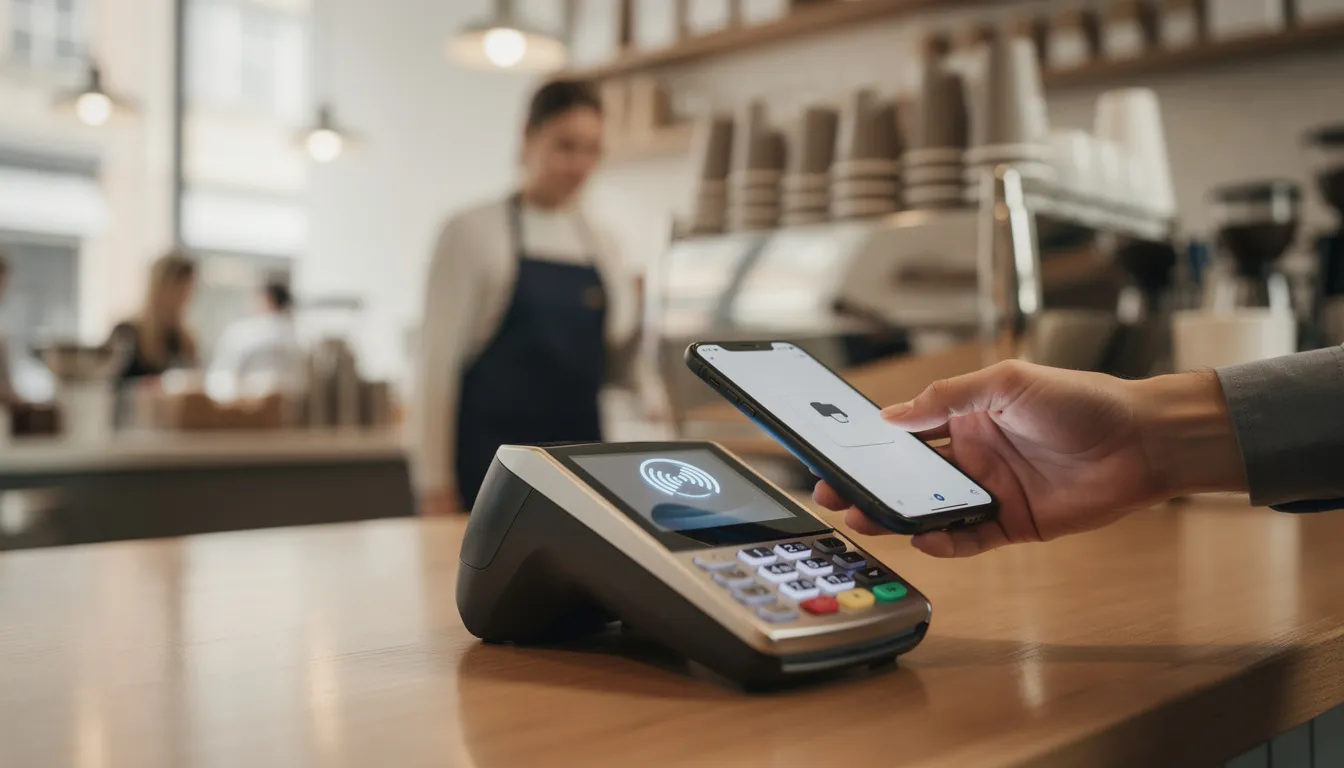
What are card machine rates and what are you really paying for?
When people talk about card machine rates, they often think about the price of the device itself. In reality, the terminal is just the tip of the iceberg.
Your card machine rates cover multiple layers of cost:
-
Transaction fees (a percentage of each sale, plus a fixed pence amount)
-
Card scheme fees (charges from Visa, Mastercard and other networks)
-
Authorisation fees (charged each time a card is checked against the issuing bank)
-
Gateway fees (if you accept online or remote payments)
-
PCI compliance costs (to meet security standards)
-
Monthly or annual service charges
The physical card payment machine (your terminal or card reader) is separate from the card processing fees that run behind every transaction. You might pay nothing upfront for hardware but get stung with high per-transaction costs. Or you might purchase a terminal outright and still face steep monthly fees.
Most UK businesses pay a mix of per-transaction percentage, per-transaction pence and monthly fixed fees. All of these are areas we can help you review and renegotiate.
It is also worth noting that rates differ depending on how you take payments. In person chip and pin or contactless methods typically attract lower fees than online or telephone transactions. We compare all of these for our clients to find the best overall deal.
Let us analyse a recent statement for you. We will show you exactly where the real cost is hiding, help you uncover any hidden fees, and how much you could save.
Typical UK card machine costs and fee types in 2025
We cannot quote competitor-specific pricing (and honestly, headline rates are often misleading). What we can tell you is that we see clear patterns across the UK market, from the cheapest card payment machine offers aimed at micro-businesses to mid-range contracts and specialist high risk merchant account arrangements. When considering the cheapest card readers, it’s important to compare not just the initial price, but also ongoing subscription fees, transaction charges, and overall value for your business.
Here are the main fee types you need to understand:
|
Fee Type |
What It Covers |
Typical Range |
|---|---|---|
|
Terminal rental |
Monthly hire of your card machine |
£10 to £30 per month |
|
Terminal purchase (upfront cost) |
One off upfront cost to buy outright |
£30 to £300+ |
|
Transaction percentage |
Percentage of each sale (transaction charges) |
0.5% to 2.5% (or higher for high risk) |
|
Fixed pence per transaction |
Flat fee per transaction (transaction charges) |
5p to 20p |
|
Chargeback fees |
Cost when a customer disputes a payment |
£15 to £25 per case |
|
PCI compliance |
Security certification fee |
£5 to £15 per month |
|
Minimum monthly service charge |
Guaranteed minimum you pay each month |
£10 to £30 |
|
Early termination penalty |
Fee for leaving before contract ends |
1% to 3% of remaining contract value |
Card payment machines charge businesses in three basic ways: the upfront cost for the machine, the percentage paid on each sale, and potential monthly contract fees.
The impact of each fee changes dramatically with volume. A low monthly rental might look attractive, but if your transaction fees are high and you process £50,000 per month, you could be haemorrhaging margin.
Online payments add another layer. If you accept payments through a website, you will likely need a payment gateway, and we compare payment gateway providers UK wide for our clients to ensure you are not overpaying.
Do not chase the absolute cheapest card payment machine headline rate without looking at the full fee structure. Let us compare card processing fees across providers for you and show you the true cost of each option.
Card machine types and how they affect the rates you pay
Choosing the right device type (and how it connects) can materially improve your card machine rates and reliability. A mismatch between your trading pattern and your terminal setup often means you are paying more than you should.
We work with businesses of all sizes to match each one with the right hardware. Here are the main categories:
-
Simple Bluetooth readers that pair with a smartphone or tablet, ideal for low-volume or occasional use
-
Portable card readers that connect to smartphones or tablets, making them perfect for mobile businesses, market stalls, or delivery services
-
Portable WiFi and 4G terminals for businesses on the move
-
Fully integrated EPOS terminals that link to tills and accounting software
-
Virtual terminals and payment links for remote payments over the phone or by email
Acquirers sometimes offer better blended rates for integrated solutions or for businesses committing to higher volumes. We can negotiate these using our portfolio leverage, securing terms that are not available to individual businesses approaching providers alone.
Speak to our team so we can recommend the cheapest card machines setup that still fits your trading pattern.
Portable vs fixed card machines
The choice between portable handheld terminals and fixed countertop units depends entirely on how and where you trade.
Portable devices using 4G connectivity (often with a built in sim card) are ideal for market stalls, food trucks, event traders and any business that moves around. They let you take payments anywhere with mobile connectivity, without relying on an internet connection.
Fixed devices integrate well with tills in shops, restaurants and salons. They are reliable, often faster and can connect directly to your EPOS or accounting software for seamless reconciliation.
Card machine rates can vary based on risk profile and use case. A busy bar with high footfall may get different terms from a mobile hairdresser. We work with both mainstream and specialist UK acquirers to match the right tariff to each environment.
Whether you trade from a fixed site or on the road, let us review your current setup and show you where you could cut costs.
Key features that justify (or waste) what you pay
Not every feature on a card machine is worth paying for. Here are the ones that matter most:
-
Contactless support (essential for fast service and customer expectation)
-
Apple Pay and Google Pay acceptance (increasingly expected by consumers)
-
Tipping functionality (important for hospitality)
-
Receipt printing (or the option to send digital receipts by email or SMS)
-
Product libraries and EPOS integration (reduces keying errors and speeds up checkout)
-
Battery life (critical for mobile businesses and busy service periods)
Paying slightly more for an integrated solution can reduce admin, speed up service and cut errors, which saves money overall. But we also help clients avoid paying for features they never use.
We structure deals so the effective card machine rates reflect the real value to your business, not the provider’s wish list.
Send us a copy of your current terminal and gateway invoices so we can identify any wasted spend.
Card machine rates for different business scenarios
Every business is different, and so are the best card payment machines and pricing structures for each. Card payment machines allow businesses to accept debit and credit card payments, offering a secure and efficient alternative to cash. We tailor card machine rates for each scenario, matching you with the best acquirer and pricing model instead of forcing a one-size-fits-all contract. When considering transaction fees, we focus on the specific needs of your card sales, ensuring you get the most suitable solution for in-person card transactions.
Here is how we approach some of the most common UK trading setups.
Pop ups, stalls and occasional traders
If you trade occasionally (seasonal pop ups, exhibition stands, craft fairs), you probably want to avoid heavy monthly fees that eat into your profits when you are not selling.
Pay as you go card readers or short term contracts often work best here. Transaction fees can be higher on simple app-based devices, so we help you compare card processing fees and work out what is actually cheaper at your expected turnover.
We work with providers who can supply devices quickly across the UK, often within a couple of working days. Short notice events can still accept card payments without scrambling.
Share your expected takings and event dates with us and we will advise on the most cost-effective setup for occasional trading.
Regular stalls, markets and mobile trades
Traders with fixed pitches or regular markets, plus mobile trades such as plumbers, electricians and delivery services, need robust 4G terminals with longer battery life.
Reliability and next day settlement often matter more than shaving a fraction off your rate. We balance rate reduction with service quality when we negotiate, so you do not save money only to lose customers because your card machine failed at a crucial moment.
We can often reduce rolling reserves or improve terms for merchants who have solid processing histories, especially in card present environments where fraud risk is lower.
Send us three months of statements and we will attempt to beat your existing deal.
Fixed shops, bars, cafés and restaurants
Seated venues and retail shops typically use a mix of fixed and portable terminals. Integrated EPOS links can speed up service and reduce keying errors, which is critical during busy periods.
These businesses often process payments at high volume but relatively low average transaction amount. Small improvements in card machine rates can mean monthly savings in the hundreds of pounds.
We frequently renegotiate blended restaurant and bar tariffs, reduce non-UK card markups (important for international card payments) and streamline gateway fees for online ordering.
Book a call with our team to review your current merchant services and card machines together.
Professional services and on the road payments
Consultants, tradespeople, home visit services and mobile beauty businesses need to take payments in the field. Waiting for bank transfers or chasing invoices hurts cash flow.
Some providers treat mobile and card not present payments as higher risk, which can increase card machine rates and reserves. We know which acquirers are more flexible for these profiles.
We can also set up virtual terminals and payment links for deposits and remote payments, often at better rates than standard public tariffs.
Let us compare hardware plus gateway options for you in one go, so you can process payments wherever you work.
Card machine providers and payment security: what you need to know
When it comes to accepting card payments, choosing the right card machine provider is about more than just finding the lowest transaction fees or monthly fees. Payment security should be at the top of your checklist, as it protects both your business and your customers from fraud and data breaches.
Reputable card payment providers invest in robust security features, including PCI compliance, end-to-end encryption, and advanced fraud protection. These measures ensure that every card transaction—whether processed through a traditional card machine, a mobile card reader, or a pay as you go device—is secure from start to finish. For small businesses, this level of protection is essential to build trust and avoid costly chargebacks.
Modern card payment machines should support contactless payments, including Apple Pay and Google Pay, to meet the growing demand for fast, convenient digital payments. Accepting these payment methods not only improves the customer experience but also adds an extra layer of security, as sensitive card details are never shared directly with your business.
When comparing card machine providers, look beyond the headline card machine cost. Consider the full fee structure: transaction fees, monthly fees, and any additional costs for features like international card payments or currency conversion. Leading providers are transparent about their pricing, helping you avoid hidden costs that can eat into your profits. Flexible contract lengths and clear terms are also important, especially if your business needs change or you operate seasonally.
The best card payment machines offer more than just payment processing. Features like digital receipts, integration with accounting software, and built-in SIM cards for mobile connectivity can streamline your operations and provide valuable business insights. If you run a mobile business or trade at multiple business locations, these extras can make a real difference in efficiency and customer satisfaction.
For businesses that accept card payments from international customers, it’s important to check how your provider handles currency conversion and what additional fees may apply. Not all card machine providers offer the same rates or support for global transactions, so be sure to compare options if you serve a diverse customer base.
Ultimately, the right payment provider will offer a secure, reliable, and cost-effective solution tailored to your business needs. Regularly reviewing your provider’s security features and pricing ensures you stay ahead of evolving threats and market changes. If you find that your current provider isn’t meeting your expectations—whether due to outdated security, high transaction costs, or poor customer support—consider switching to a provider that better aligns with your goals.
By taking the time to research and compare card payment machines and providers, you can save money, reduce risk, and deliver a seamless payment experience for your customers—keeping your business competitive in the fast-moving world of digital payments.
How card machine pricing works behind the scenes
Card machine rates in the UK are built from multiple components. Understanding them helps you see why we can often negotiate better deals.
Card machines work by getting information from a customer’s debit or credit card, which is sent to the payment processor for approval. Card payment machines can accept payments from major card issuers like Visa and Mastercard, though some may not support American Express.
When a customer taps their card, the transaction flows through several parties:
-
Your card payment machine sends the request to your acquirer (also known as a payment service provider, the bank or processor that handles your merchant account)
-
The acquirer/payment service provider routes it to the card scheme (Visa, Mastercard, Amex, etc.), and then to the credit card provider
-
The credit card provider passes the transaction details to the customer’s bank (the issuer)
-
The customer’s bank approves or declines and sends the response back
-
Funds settle into your business account or business bank account, typically within one to three working days
At each step, fees are charged:
-
Interchange fees (paid to the issuing bank, typically 0.2% for UK debit, 0.3% for credit, but higher for corporate and international cards)
-
Scheme fees (paid to Visa or Mastercard for network operations)
-
Acquirer margin (your processor’s profit)
-
Gateway fees (if applicable for online payments)
Some card payment providers offer to manage the merchant account for you, allowing for quick setup but often with higher transaction fees.
High risk merchant account instant approval offers can look attractive, but they often come with high margins and rolling reserves. We can sometimes reduce these by using specialist acquirers who understand your industry.
We use our portfolio of UK clients to negotiate lower margins and more favourable terms. Essentially, we give you access to wholesale style pricing instead of the retail rates you would get going direct.
Send us a recent merchant statement so we can decode the line items and show you what each part of your card machine rates actually covers.
How fast do funds settle into your account?
Most UK acquirers settle funds within one to three working days. Some premium services offer same day or next day settlement, but there is usually an extra cost.
For cash flow-sensitive sectors like hospitality and retail, we often prioritise faster settlement options when negotiating, provided the increase in fees is justified by the value to your business.
We can also help you compare card processing fees between providers who offer instant payouts and those with standard settlement cycles.
Tell us your current settlement time and we will see if we can improve it without increasing your overall card machine rates.
Do you need a new merchant account to improve your rates?
Sometimes you can secure better card machine rates by renegotiating with your existing acquirer. Other times, moving to a new merchant account entirely delivers better savings.
As a merchant services broker UK based, we work with multiple acquiring banks and payment service providers. We can benchmark your options quickly and tell you which route makes the most sense.
We manage the application and underwriting process for you, including supporting documents and any high risk industry questions.
Let us review whether a simple repricing with your current provider or a full move would deliver the best saving.

Why work with us instead of going direct to providers?
We use our transaction volume across UK clients to negotiate card machine rates that most individual businesses cannot access when they approach a bank or provider alone. By using our ‘switch save’ approach, we help businesses benefit from switching card payment providers, making it easy to transition and quickly realize cost savings.
Banks and acquirers reward us for bringing them consistent volume. That is why we often beat standard bank rates by 15% to 25%, sometimes more for larger businesses. Businesses can also save money on card machine costs by switching providers or negotiating customized rates based on their transaction volume.
Our service is free to you. Our commission is paid by the acquiring partners, so you keep 100% of the savings we secure.
We support complex and high risk sectors. We already know which providers are open to industries such as online gaming, supplements, travel and subscription models, saving you weeks of rejected applications and wasted time.
Start a free, no obligation comparison of your card machine rates with our team today.
Volume leverage: our wholesale style pricing advantage
When we negotiate on your behalf, we bring the combined annual processing volume of hundreds of UK clients to the table. That gives us leverage that a single business, however large, simply does not have.
We regularly review market pricing, so we know what “good” looks like for businesses of different sizes and risk profiles. We have seen what leading providers offer to their best customers, and we work to get you into that bracket.
We often secure tailored rate packages with tiered pricing that are not advertised on public websites. These deals are reserved for brokers with proven volume.
Let us benchmark your current pricing against the ranges we see across our portfolio.
High risk and hard to place industries
Some sectors are classed as high risk by acquirers. This can mean higher card machine rates, rolling reserves (where a percentage of your sales is held back for months), and longer settlements.
Industries commonly affected include:
-
Online gambling and gaming
-
Supplements and CBD
-
Travel and ticketing
-
Adult content
-
Subscription and recurring billing models
-
Debt collection and financial services
We work with specialist high risk merchant account providers who understand these models and can often offer instant approval in straightforward cases.
We know which banks accept specific industries and we negotiate on reserves, chargeback thresholds and rolling reserve percentages where possible. For example, we regularly negotiate reserves down from 10% to 3% to 5% for established businesses.
If you operate in a high risk sector, contact us directly so we can assess your profile and match you with the right provider.
How we compare card machine rates for you (our process)
Our process is straightforward:
-
You send us your statements (recent merchant statements or card machine invoices)
-
We analyse and benchmark your current rates against what we see across the market
-
We approach suitable providers on your behalf, using our volume leverage
-
We present clear offers so you can compare like for like
-
We help with onboarding and terminal delivery if you decide to switch
Most clients receive initial comparison results within a few working days. New terminals can often be live within 48 hours after approval.
We check more than headline rates. We look at contract length, PCI compliance terms, early termination clauses and chargeback handling. All the things that can catch you out later.
There is no obligation to switch if the savings are not compelling. That said, we usually find room to improve terms.
Start this process by uploading a recent merchant statement through our secure portal.
What information we need from you
To give you an accurate comparison, we typically request:
-
Recent merchant statements (ideally the last three months)
-
Average monthly card turnover
-
Average transaction size
-
Card mix (what proportion is debit card vs credit vs corporate)
-
How and where payments are taken (in person payments, online, phone)
We also ask about hardware needs: how many terminals you require, how many business locations you operate from, and any online or telephone payment requirements.
The more accurate the information, the more precise our savings projections and recommended card machine rates will be.
Gathering these documents usually takes less than ten minutes. Our team does the heavy lifting from there.
Next steps: let us reduce your card machine rates
Most UK small businesses are paying more than they need to for card machine rates and card processing fees. This is especially true if you have not reviewed your deal in the last 12 to 24 months.
We provide a free, no obligation review. We use our volume leverage to secure better terms. We support both standard and high risk sectors, so whatever your business needs, we can help.
Speak to our team today. Upload a statement, request a call back, or simply get in touch. There is no cost to your business for using our brokerage.
We aim to minimise your card payment costs so you can focus on running and growing your business. Let us do the hard work of finding you the best card machine for your business, so you can save money and get back to what you do best.