
Streamline Your Payment Processing
Effortlessly manage in-person and online transactions with our comprehensive payment solutions.
Taking Payments: Let Us Secure You Cheaper, Smarter Ways To Get Paid
Want to take payments without overpaying? We can help
Most UK businesses are paying far more than they should to accept payments. Whether you process card payments through a card machine in store, collect payments via an online checkout, or handle phone payments through a virtual terminal, the fees add up. As a merchant services broker UK, we exist to cut those costs for you.
We use our volume leverage with banks and acquirers across the UK to access wholesale-style rates that individual businesses simply cannot negotiate on their own. Because we bring significant aggregated volume to these providers, they offer us pricing that would never be available to a single SME walking in off the street. Our global network of small businesses allows us to negotiate even better rates and terms, benefiting clients of all sizes.
Our service is 100% free to the business owner. The acquiring bank or payment provider pays us, so you keep all the savings we find for you.
We work with businesses across all sectors, including small businesses, from standard retail and hospitality to “hard to place” industries that struggle to get approved. If you need a high risk merchant account instant approval or have been declined elsewhere, we know which banks will say yes.
Ready to see what you could save? Upload your latest merchant statement for a free cost comparison today.
How taking payments really works (and where the costs hide)
When a customer taps their card, inserts a chip, or enters their card details online, a surprisingly complex chain of events happens in seconds. Card transactions involve multiple parties and can incur different fees depending on the type of card and the customer’s bank. Understanding this process helps explain why the costs can vary so much, and where savings can be found.
Here is what happens in a typical card transaction:
- The customer presents their debit card or credit card at your card machine, payment gateway, or enters details into your online checkout
- The payment system encrypts the card data and sends it to your payment processor
- The processor routes the request through the relevant card networks (Visa, Mastercard, or others) to the customer’s bank
- The issuing bank checks the card is valid, that funds are available, and runs fraud checks
- An authorisation (or decline) message flows back through the same chain to your terminal or website
- Once authorised, the funds are settled into your business bank account, typically within one to three days
The core players in a UK card transaction
| Player | Role |
|---|---|
| Card Schemes | Visa, Mastercard, Amex, Maestro provide the network infrastructure |
| Acquiring Bank | Your bank that receives funds on your behalf |
| Payment Gateway | The software that securely transmits online card payments |
| Merchant Account Provider | Holds funds before settlement to your bank account |
| Payment Processor | Routes transaction data between all parties |
Where the fees hide
When you look at a typical merchant statement, you will see multiple fee lines. Common charges include:
- Transaction percentage (often 1% to 2.5% depending on card type)
- Pence-per-transaction fees (typically 5p to 20p per sale)
- Gateway fees for online transactions
- Monthly terminal rental or minimum monthly service charges
- Monthly fee
- PCI compliance fees
- Statement or admin fees
- Authorisation fees per transaction
Some providers may also charge a small fee for certain services, such as instant transfers or additional features.
Many businesses end up on “retail” pricing because they went direct to a single bank or provider. These standard rates are rarely the best available. We use our buying power to negotiate lower blended rates across every fee line, not just the headline percentage.
We handle all of this complexity on your behalf. Our team reviews every line of your statement to identify unnecessary costs and negotiate reductions.

The main ways UK businesses can take payments
Most of our clients combine several payment methods to match how their customers prefer to pay. Each payment method—such as countertop terminals, tableside portable units, online ordering systems, mobile card readers, and payment links—offers different advantages depending on your business needs. A restaurant might need countertop terminals, tableside portable units, and an online ordering system. A tradesperson might rely on a mobile card reader and payment links sent via text. We help you design the right mix for your specific situation.
Here are the key payment method options we help businesses compare:
- Card machines in person: Countertop, portable, or fully mobile terminals for chip and pin payments, contactless payments, and payments in store
- Online payment gateways: Secure checkouts for your website or free online store platform
- Phone or mail order (MOTO payments): Virtual terminal for keying in card details when customers call
- Payment links: Send a link via email or SMS so customers pay securely without a full checkout
- Recurring payments: Direct debits or card-on-file for subscriptions and repeat billing
We compare card processing fees across multiple acquiring banks and providers for each payment method. We never force a “house” solution on you just because it is convenient for us. Our job is to find the cheapest and most suitable option for your business.
When choosing your taking payments set-up, we help you understand the trade-offs between price, speed of settlement, hardware type, and customer experience. Sometimes paying slightly more for faster settlement or better fraud tools makes commercial sense.
Whether you run a retail counter, mobile van service, online-only business, or a mix of all three, speak to us about your exact set-up and we will recommend a tailored approach.
Taking payments in person with card machines
Chip and pin and contactless remain the dominant in person payments methods across the UK. With contactless limits now at £100 and customers expecting to easily pay with a quick tap, having the right terminal matters.
We supply and broker deals on a full range of card reader and terminal options:
| Terminal Type | Best For | Features |
|---|---|---|
| Countertop | Fixed tills, reception desks | Mains powered, Ethernet or Wi-Fi connection |
| Portable (Wi-Fi) | Restaurants, hospitality, small retail | Roams within venue, returns to charging base |
| Fully Mobile (4G/5G) | Delivery drivers, tradespeople, markets | Built-in SIM, works anywhere with signal |
We source the cheapest card payment machine options for your actual usage profile, not just the lowest headline purchase price. A terminal that costs £15 per month but charges higher transaction fees could cost you far more than one at £25 per month with lower rates.
Every terminal we recommend accepts all major cards (Visa, Mastercard, Amex, Maestro) plus digital wallets including Apple Pay and Google Pay. These terminals allow your business to accept card payments, including both credit and debit cards. They are also equipped to accept contactless cards, making transactions faster and more convenient for your customers. We ensure your terminal and acquirer configuration allows customers to pay however they prefer, including when a customer taps their phone or watch.
When merchants accept EMV chip credit cards, they can accept credit card payments securely and with reduced fraud liability, as the fraud liability shifts to the card issuer rather than the merchant. This is another reason we ensure all our terminal recommendations support full chip and contactless capability.
Send us your average monthly in-person turnover and we will benchmark what you should really be paying versus your current costs.
Taking payments online and by phone
Since 2020, online sales have become essential for UK businesses of all sizes. Even traditionally offline businesses now need secure ways to accept online payments alongside physical terminals.
A payment gateway is the software that securely transmits transaction data between your website checkout and the payment processor. Think of it as the online equivalent of a card machine. Modern gateways encrypt all card data and use tokenisation to protect customer data throughout the process.
Common online checkout options include:
- Hosted payment pages: Customer is redirected to a secure page (often used by smaller businesses wanting simplicity)
- Embedded forms: Payment fields appear directly on your website for a seamless customer experience
- Pay-by-link solutions: Send a secure link by email or SMS for customers to complete payment
For phone payments or mail orders, staff key card details into a virtual terminal. These are card-not-present transactions, which carry higher fraud risk and typically attract higher card processing fees than in person chip and pin payments.
We compare leading payment gateway providers UK to find you lower rates, better fraud tools (including 3-D Secure and machine learning screening), and smoother customer checkout experiences. Not all gateways are equal, and the difference can be significant in both cost and conversion rates.
Let us review your current gateway fees and any 3-D Secure, chargeback, or additional fees you may be incurring. There is often room for improvement.
Alternative payment methods: beyond cards and cash
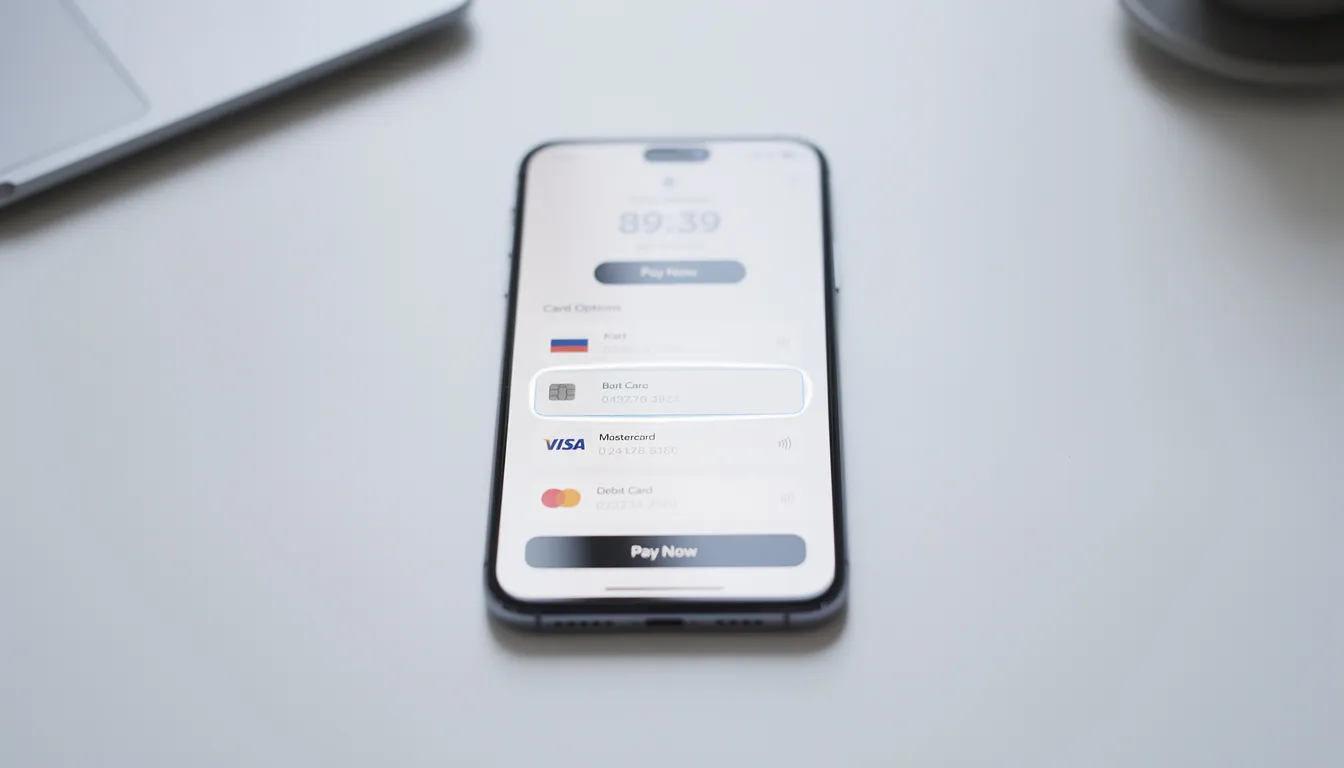
As the payments landscape evolves, businesses are no longer limited to just card payments or cash payments at the till. Alternative payment methods are rapidly gaining traction, giving both you and your customers more flexibility in how to pay and get paid.
Digital wallets like Google Pay and Apple Pay allow customers to make fast, secure contactless payments using their smartphones or smartwatches—no need to carry a physical card. These mobile payments are not only convenient but also add an extra layer of security, as card details are never shared directly with the merchant.
Online payments have also expanded beyond traditional credit card payments and debit card payments. Services like PayPal, as well as direct bank transfers, offer customers additional ways to pay, especially for online sales or remote transactions. By accepting a wider range of payment methods, you can reduce cart abandonment rates and make it easier for customers to complete their purchases, whether they’re shopping in-store, online, or on the go.
The right payment processor and payment gateway make it simple to accept payments from all these sources, integrating seamlessly with your point of sale, website, or mobile device. By offering multiple payment options—including contactless payments, online card payments, and even cash payments—you can boost customer satisfaction and stay ahead of the competition.
Payment processor, gateway, and provider: who does what?
When you’re setting up to accept payments, it’s important to understand the different players involved in payment processing. Each has a specific role in making sure your business can accept payments smoothly, whether online, over the phone, or in person.
A payment processor is the engine that moves money from your customer’s bank to your business account, handling the technical side of each transaction. The payment gateway acts as the secure bridge between your website or point of sale and the payment processor, collecting and encrypting payment details. Finally, your payment provider is the company that brings these services together, offering you the tools and support needed to process payments efficiently.
Choosing the right combination of payment processor, payment gateway, and payment provider ensures your business can accept payments securely and reliably, whether you’re taking online payments, phone payments, or in person payments. Understanding these roles helps you make informed decisions and avoid unnecessary complexity or costs as your business grows.
What is a payment processor?
A payment processor is the company that handles the behind-the-scenes work every time your business accepts a payment. Whether you’re taking online payments, credit card payments, or debit card payments, the payment processor verifies your customer’s payment information, checks for available funds, and moves the money into your business bank account.
Payment processors also provide the hardware and software you need to accept payments, such as payment terminals, card readers, and virtual terminals for remote transactions. By partnering with a reliable payment processor, your business can process payments quickly and securely, giving you peace of mind and ensuring your customers’ payment information is protected.
The right payment processor will support a range of payment types—including card payments, debit card payments, and credit card payments—so you can offer your customers the flexibility they expect, whether they pay in person or online.
What is a payment gateway?
A payment gateway is the technology that connects your business’s website or point of sale system to your payment processor. When a customer makes a purchase, the payment gateway collects their payment information, encrypts it for security, and sends it to the payment processor for authorisation and settlement.
Payment gateways are essential for accepting online payments, phone payments, and even in person payments through modern point of sale systems. They add an extra layer of payment security by ensuring sensitive payment information is transmitted safely, often using advanced features like tokenization to further protect customer data.
By integrating a payment gateway into your checkout process, you can offer customers a seamless and secure payment experience, whether they’re entering card details online, paying over the phone, or tapping their card in store.
Understanding your payment provider
Your payment provider is the partner that brings together all the services you need to accept payments, both online and in person. A good payment provider offers payment processing, payment gateways, and merchant accounts, all under one roof, making it easier for you to manage your payments.
When choosing a payment provider, look for transparent pricing with no hidden fees, robust payment security, and responsive customer support. The best providers will offer a wide range of payment methods—including credit card payments, debit card payments, and contactless payments—so you can accept payments in whatever way your customers prefer.
It’s also important to consider transaction fees, the provider’s reputation for payment security, and how easily their system integrates with your existing business tools. By understanding what your payment provider offers and how they charge for their services, you can ensure you’re getting the best value and a payment solution that grows with your business.
Choosing the right merchant services set-up
The “right” payment solution depends on your turnover, average ticket size, risk profile, and how your customers prefer to pay. Getting the cheapest card machine means nothing if it does not suit your business model or if the provider’s rates vary depending on card type. Advanced systems may also offer inventory management features, which help retail businesses track stock levels and streamline operations.
How we assess your business
When you come to us, we typically ask for three to six months of card statements. This lets us analyse:
- Your total monthly volume and average transaction size
- The mix of card types you receive (debit, credit, corporate, international)
- Settlement delays and cash flow impact
- Any chargeback patterns or customer disputes
- Current fees across all line items
Sometimes it makes sense to combine your merchant account and gateway into a single package to reduce total cost. Other times, separating them makes sense if you need a specialist gateway with particular features (such as recurring billing or multi-currency support).
We also scrutinise contract terms. Many providers lock businesses into long contracts with auto-renewals and hidden termination fees. We favour flexibility and short minimum terms wherever possible, so you are never trapped.
Send us your current contract expiry dates and we can plan a cost-saving switch at the right time, without triggering early exit fees.
High risk and “hard to place” merchant accounts
Some sectors struggle to get approved for merchant accounts through standard UK banks. Industries often treated as high risk include:
- Travel agencies and tour operators
- Online gaming and gambling
- CBD and wellness products
- Subscription services with recurring billing
- Ticketing and events
- Adult content
If you operate in one of these sectors, you have likely experienced repeated application declines, sudden account closures, rolling reserves held against your funds, or very high transaction fees that eat into margins.
We maintain relationships with acquirers and specialist banks who actively work with high risk merchants. When a case is prepared correctly with the right documentation and trading history, we can often secure high risk merchant account instant approval and faster underwriting than if you applied directly.
We negotiate on your behalf for:
- Lower or removed rolling reserves
- Faster settlement times
- More realistic volume limits
- Competitive transaction fees given the risk profile
Our track record and aggregated volume across many clients gives us leverage that individual high risk businesses simply do not have.
If you have been declined or had an account closed, send us details of your last provider rejection. We will advise on realistic options and which banks are most likely to approve your business.
The costs of taking payments (and how we reduce them)
Every card or digital payment carries fees. That is unavoidable. But many UK businesses are paying “retail” rates that can often be reduced by 10% to 25% with the right negotiation and provider selection.
Breaking down the main costs
| Cost Type | Typical Range | Notes |
|---|---|---|
| Transaction percentage | 0.5% to 2.5% | Varies by card type and risk level |
| Per-transaction fee | 5p to 20p | Hurts more on small transactions |
| Terminal rental | £10 to £30/month | Or outright purchase |
| Minimum monthly charge | £10 to £25 | Pay even if you process nothing |
| PCI compliance fee | £5 to £15/month | Or annual charge |
| Chargeback fee | £15 to £25 per dispute | Can add up quickly |
| Cross-border surcharge | 0.5% to 1.5% extra | On non-UK cards |
| Gateway fee | £10 to £30/month | Plus per-transaction fees |
We benchmark each client’s total effective rate against what we routinely secure with our panel of acquirers. Our aim is to cut the true cost per transaction, not just one isolated line item that looks good on paper.
Our volume leverage argument is simple: because we introduce large aggregated volumes to banks, we can often obtain cheaper rates than a single SME could negotiate alone. Banks want our business because we bring them many merchants. They reward that with better pricing, and we pass those savings to you.
Request a free, no-obligation cost analysis. We will only recommend changing provider if we can see clear savings or genuinely better terms for your business.
Comparing card processing fees the right way
Comparing only headline percentage rates is one of the biggest mistakes businesses make. A provider quoting 1.5% might look cheaper than one quoting 1.7%, but once you add the per-transaction fee, monthly charges, and gateway costs, the “cheaper” provider could actually cost you more.
Here is how to compare card processing fees properly:
- Calculate your effective blended rate: Total fees paid divided by total card turnover. This gives you the true percentage you are paying.
- Consider average ticket size: If your average sale is £15, a 20p per-transaction fee adds over 1.3% to every sale. If your average is £150, that same 20p is only 0.13%.
- Include all fees: Monthly rentals, PCI fees, authorisation fees, statement fees, and any extra cost for premium cards or international transactions.
- Compare settlement terms: Getting paid in one day versus three days affects cash flow. Sometimes paying slightly more for next-day settlement is worthwhile.
- Factor in support quality: Cheap providers with poor support can cost you in downtime, unresolved issues, and frustrated customers.
We also review chargeback ratios and fraud tools. Saving a small amount on fees is pointless if disputes and write-offs increase because your payment provider lacks proper screening.
Send us at least one full monthly merchant statement and we will run a proper like-for-like comparison for you.
Security, compliance, and fraud protection when taking payments
Any business taking card payments in the UK must meet PCI DSS (Payment Card Industry Data Security Standard) requirements. Failing to comply can result in fines, surcharges, or even losing your ability to accept cards.
We only work with PCI compliant providers. Beyond that, we help you minimise your compliance burden by recommending solutions that reduce the scope of how you handle card data. For example, using tokenisation means you never store actual card numbers, which simplifies your PCI requirements significantly.
For online transactions, Strong Customer Authentication (SCA) and 3-D Secure are now mandatory in most cases. Modern payment gateways use machine learning and configurable risk rules to screen transactions, blocking fraudulent orders while letting legitimate customers pay smoothly.
We help you balance fraud controls and customer experience. Overly aggressive fraud screening blocks genuine customers and loses sales. Too relaxed, and you suffer chargebacks and losses. The right provider gives you granular control and transparent pricing on fraud tools.
Ask us to review any PCI or fraud-related charges on your current account. These can sometimes be reduced simply by switching to a provider with more sensible fee structures.
Chargebacks, refunds, and dispute handling
A chargeback occurs when a cardholder disputes a transaction with their issuing bank. Common causes include:
- Customer does not recognise the transaction (often a billing descriptor issue)
- Item not received or not as described
- Fraudulent use of the card
- Duplicate charges or processing errors
Chargebacks are costly. You lose the transaction amount, the goods or services provided, and pay a chargeback fee (typically £15 to £25). High chargeback ratios can lead to account termination or rolling reserves.
Different providers handle customer disputes very differently. Some offer:
- Clear online portals to view and respond to disputes
- Email alerts when a chargeback is filed
- Guidance on evidence submission
- Pre-chargeback alerts (giving you a chance to refund before it escalates)
We help you choose acquirers and gateways with stronger dispute management support. Prevention is even better: clear refund policies, accurate billing descriptors customers recognise, and detailed order records all reduce avoidable unpaid invoices and disputes.
Let us review your recent chargeback history. A different provider or improved processes could reduce these losses significantly.
How we work with you to improve taking payments
Our process is straightforward and designed to respect your time:
- Discovery call: We learn about your business, payment methods, volumes, and any pain points
- Statement review: You send us recent merchant statements and we analyse every fee line
- Market search: We approach our panel of acquirers and payment services providers to get competitive quotes
- Proposal presentation: We present options with clear cost comparisons, showing projected savings
- Onboarding support: If you decide to switch, we manage the transition and ensure everything works smoothly
We work with a broad panel of UK and European acquirers, banks, and payment gateway providers UK. This gives us access to multiple offers for each client, rather than pushing a single “house” product.
Our service remains 100% free to you. There is no obligation to switch. We only earn if you decide to proceed with a provider we introduce. The payment provider pays our fee, not you.
Typically, we aim to reduce clients’ total payment costs by 10% to 25%, though this varies depending on your current rates and volumes. We never quote guaranteed figures because every business is different, but we are confident in our ability to find meaningful savings for most UK businesses.
Start your free review today. Upload your merchant statement or arrange a short consultation call with our team.
Ongoing support and reviewing your rates
Payment pricing can drift upwards over time. Providers introduce new fees, card schemes adjust interchange rates, and your business changes. A rate that was competitive two years ago might not be today.
We prefer to stay in touch with clients to keep their rates competitive. We can schedule periodic reviews, for example annually or when your turnover changes significantly, to re-check the market and renegotiate if needed.
When you add new channels (perhaps opening a free online store, adding new physical locations, or expanding into mobile payments), we help ensure your payment solution scales smoothly. No need to start from scratch with a new provider search.
As your volumes grow, we may be able to use that increased scale to negotiate further fee reductions. Providers are more willing to offer better terms to larger volume merchants, and our aggregated buying power amplifies this effect.
You can rely on us as your long-term merchant services partner, not just for a one-off switch. Whether you need help with accounting software integration, adding new payment methods like Google Pay, or expanding internationally, we are here to support your growth.
Key takeaways
- Taking payments costs UK businesses more than it should, but we can often reduce fees by 10% to 25%
- Our service is completely free to you; the payment provider pays us
- We use volume leverage to access wholesale rates unavailable to individual businesses
- We help with all payment methods: in person, online, phone, recurring, and mobile payments
- High risk industries and previously declined merchants can access specialist providers through us
- We review every fee line, not just headline rates, to find genuine savings
- Ongoing support means your rates stay competitive as your business grows
Upload your merchant statement today for a free, no-obligation cost analysis. Let us handle the complexity of process payments while you focus on running your business.